REBECCA MOCCIA. ANCESTORS SYNDROME

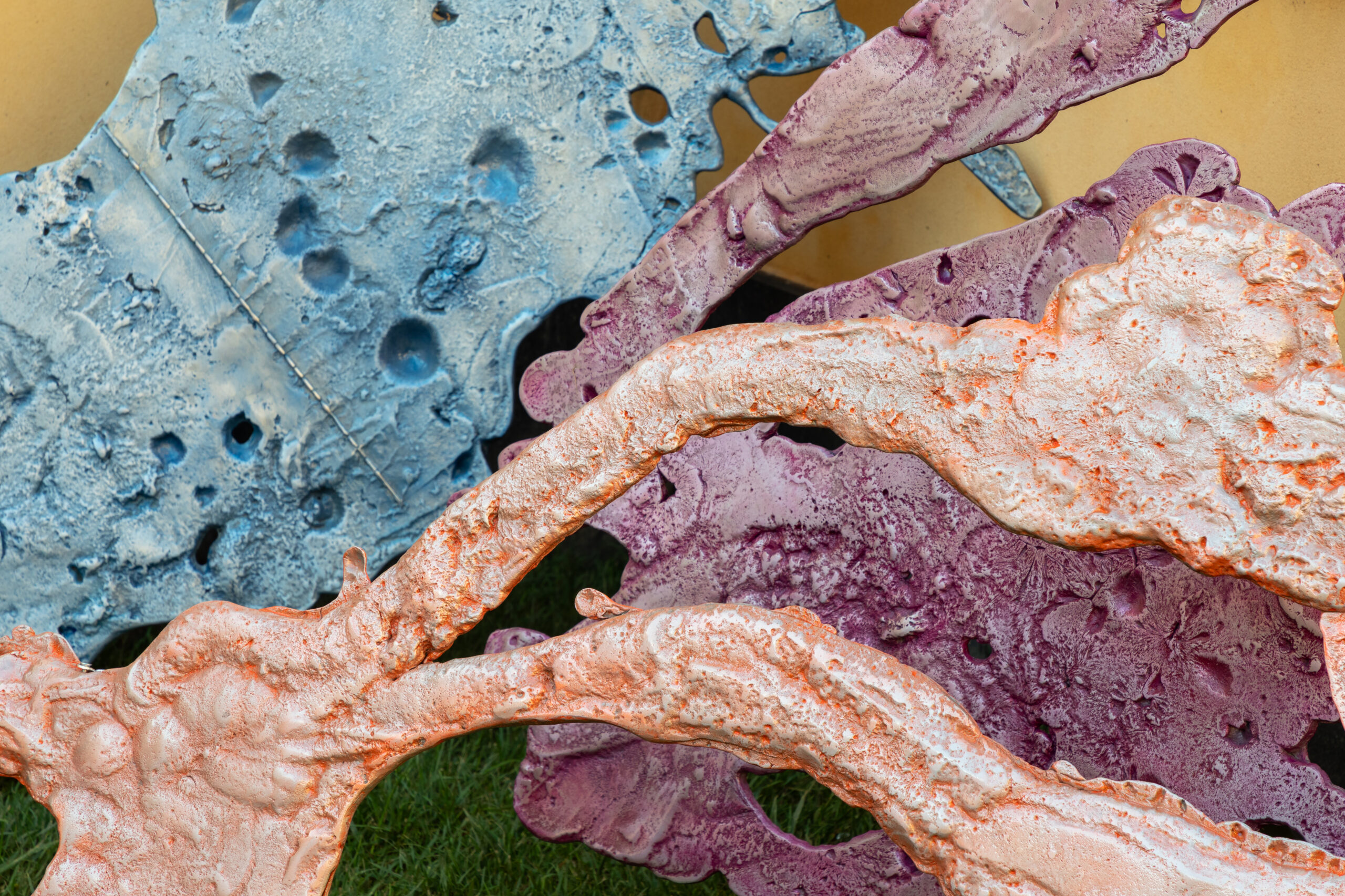
Ancestors Syndrome is Rebcca Moccia’s  first metalwork. Shaped after a geological map of Vesuvius preserved at the Archivio Russo Somma,  and inspired by the story of the artist’s grandmother—who was forced to migrate and marry after the last eruption in 1944—“it is a detrital and mobile monument to our human and non-human southern mothers,” says the artist.

Video

he work unfolds as an expanded representation of an emotional, social and cultural inheritance that is passed on involuntarily. It takes the form of a mobile, detrital monument, mirroring a heritage that, particularly in the case of subaltern subjectivities and territories, often reaches us through disorganised and fragmentary traces.
Continuing the interest in the materiality of contemporary emotional distress and its connection to the neoliberal socio-economic system — initiated with the project Ministry of Loneliness (2022–2025) — the work inaugurates a new body of works and research dedicated to exploring nostalgia, understood as an affective, economic and political device.

Over the past year, Rebecca Moccia has felt the need to re-centre herself — to adopt a more conscious and situated perspective on her own identity and practice, starting from her personal history. This is why she decided to spend much more time in Naples, the city where she was born and from which her family emigrated for work.

During this research, she came across a geological map of Vesuvius at the Russo Somma Archive. She was struck by its depiction of time and events as stratified rather than linear — and by its chromatic rendering of the various layers and lava flows, so artificially vivid in contrast to the monochrome blackness of volcanic soil.

Rebecca Moccia, b. 1992
Ancestors Syndrome, 2025
Coated aluminum
Variable dimensions

“Ne è nata una sorta di opera monumentale, che ragiona sul sedimento materiale e affettivo, e che ha come perno biografia, geografia e politica. Per me era importante legare alla storia personale anche quella sociale sulla condizione umana femminile, subalterna e meridionale.”

On the anniversary of the eruption, she walked the path taken by the lava flow of 1944. In the foundry, she wanted to replicate the path of a molten, magmatic material – aluminium – as it falls, settles, cools, and transforms upon contact with air into an unpredictable shape, as fascinating as it is dangerous.

Rebecca Moccia, b. 1992
Ancestors Syndrome (Flow), 2025
Coated aluminum
Piece 1: 172 x 65 cm Piece 2: 51 x 80 cm

As for the colour, the process involved another form of sedimentation: a patina-like technique in which the digital colours of the geological map were deposited onto the surface of the aluminium, following its contours ,  escaping the flatness of representation.

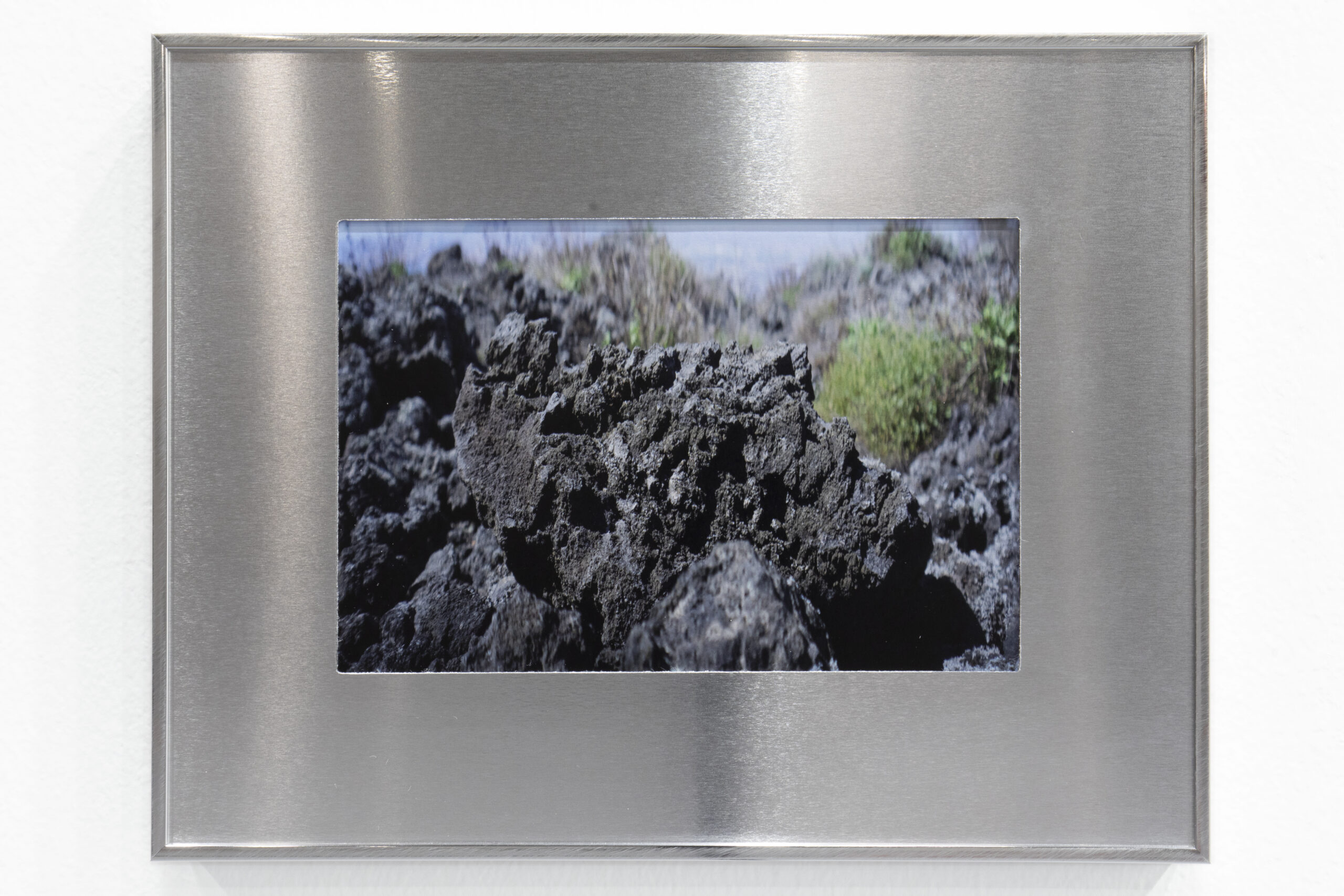
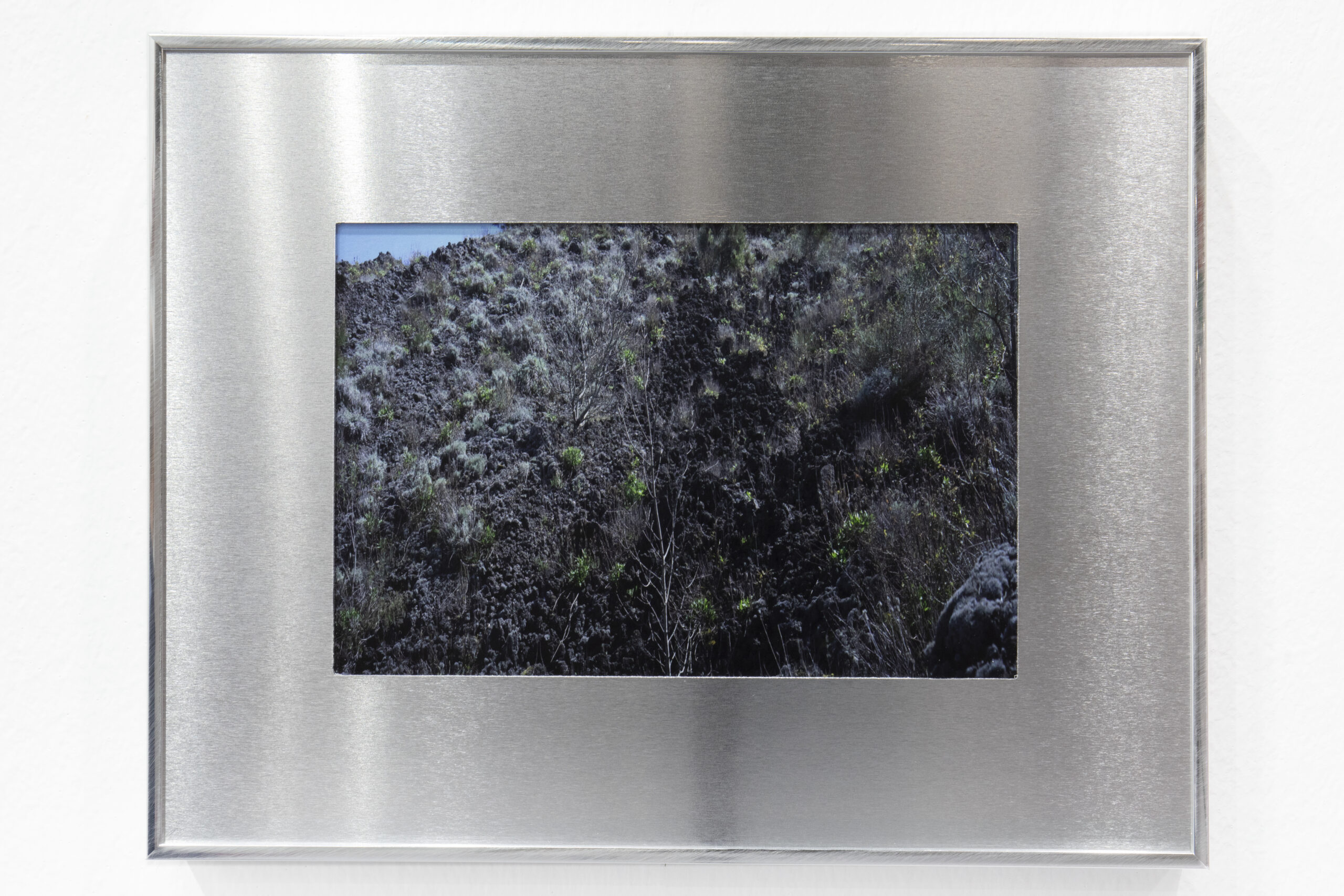
The sculptural installation is completed by a series of anamorphic photographs taken on the volcano along the path of the 1944 lava flow. This type of lens, originally developed for military use and subsequently for cinema, allows for the expansion of the human visual field by capturing a large amount of information, while however producing compressed and distorted images.

Rebecca Moccia, b. 1992
Ancestors Syndrome, 2026
Print on Canson Rag Photographique cotton paper, aluminum
23.2 x 29.7 cm - - 9 1/8 x 11 3/4 in
Rebecca Moccia, b. 1992
Ancestors Syndrome, 2026
Print on Canson Rag Photographique cotton paper, aluminum
23.2 x 29.7 cm - - 9 1/8 x 11 3/4 in

These images anticipate the non-fiction video Positionality Statement, conceived as a positional declaration of the entire research, which will be presented at Temple Bar Gallery + Studios in May 2026.


Inquire